• Viet Nam
  • American
  • Loading...

    Tổng tiền:

    Loading...

    Danh mục sản phẩm

    Loading...

    Sản phẩm hot

    hoaphatiec.vn

    ASC-4 Battery

    Liên hệ
    ASC-4 Battery
    ASC-4 Battery
    DEIF / Denmark
    Còn hàng

    Features

    • Solar, storage, wind, Mains and genset integration in hybrid applications
    • ASC-4 sustainable controllers and AGC-4 Mk II/AGC 150 let you control up to 32 gensets
    • Applications with up to 16 sustainable power plants
    • Simple graphical configuration
    • Communicates with BCU, BMS, or PCS over Modbus
    • Charging/discharging based on SOC or Schedular Command timers
    • Optimal genset load constraint
    • Define and change priority of connected power sources
    • Controls functions, energy source or power source
    • Grid-forming, grid-following, or droop mode (virtual synchronous generator)
    • Uptime guaranteed through spinning reserve
    • Maximised sustainable power penetration
    • Load dependent genset start/stop by PMS or DO
    • SOC dependent genset start/stop by DO - Rental
    • Minimum genset load constraint
    • Ideal for self-consumption applications
    • Highly customisable with user-friendly M-Logic tool
    • Control of breaker
    • Record time commissioning with DEIF Emulation
      - uses and verifies the functions of the real system for test, production and design
    • Suitable for power management solutions fitted with AGC-4AGC 150 or AGC 200 genset controllers
    • Suitable for stand-alone solutions using multi-instruments such as DEIF’s MIB or MIC
    • Chia sẻ qua viber bài: ASC-4 Battery
    • Chia sẻ qua reddit bài:ASC-4 Battery

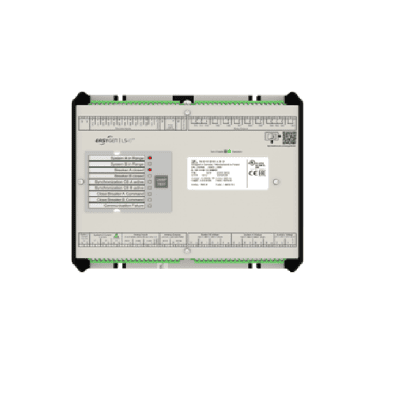
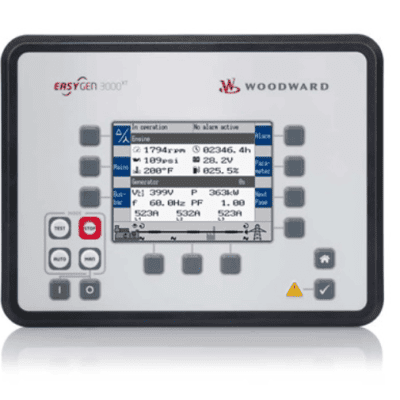
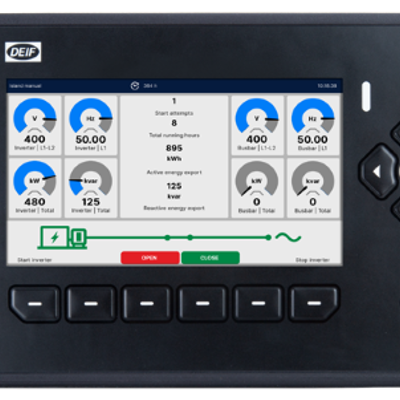
    The DEIF ASC-4 Battery is a highly configurable sustainable energy storage controller that allows seamless integration of an ESS in greenfield applications with other DEIF controllers such as the AGC-4 Mk II advanced genset controller and other sustainable controllers in our ASC-4 range.

    Wide range of control strategies

    The ASC-4 Battery lets you store and use green power from PV panels and wind turbines. The controller handles charging and discharging as required by the operating scenario, based on state of charge control of the ESS or using Schedular-Command timers that allow you to define which sources to charge from, and when. It includes control strategies such as peak shaving, load take-over, fixed power, automatic mains failure (AMF), and mains power export (MPE), allowing it to be used for a wide range of applications. You can define and change the priority of connected power sources.

    Energy source, power source, or droop mode

    The ASC-4 Battery is suitable for grid-forming or grid-following applications, and it supports energy source or power source functions. It is also able to run in droop mode (acting as a virtual synchronous generator) if the ESS supports this. The ASC-4 Battery can switch operating modes very quickly as required. It supports grid/power quality support with active or reactive power, spinning reserve capability (reducing the number of gensets running), frequency and load response, and load control.

    Built-in power metering

    The built-in power metering feature of the ASC-4 Battery measures busbar voltage, current, and frequency before and after the breakers. Operation and mode switches can be configured to be based on these readings, for example carrying out mode switches based on voltage and frequency changes.

    Full compatibility with wide range of equipment

    The ASC-4 Battery can communicate with a BCU (battery control unit) or directly with a BMS (battery management system) and PCS (power control system) over Modbus, allowing it to be used with a wide range of ESSes. It is designed for full compatibility with DEIF controllers, allowing you to set up an EMS quickly and efficiently. For an updated compatibility list for the controller, see Application Notes on the Documentation tab.

    M-Logic provides flexibility and customisability

    The setup of the ASC-4 Battery can quickly and easily be reconfigured as needed using the user-friendly M-Logic tool (part of DEIF’s free PC utility software offering). This allows the controller to be customised to a wide range of local applications.

    Emulation feature provides safe system testing

    The built-in emulation feature of the ASC-4 Battery enables you to interact with the controller in a controlled and safe environment without risking to damage any equipment. All you need to do to perform a complete test of your system is to turn on your controller and connect communications.


    Tags


    Sản phẩm liên quan

    AGI 400 series
    Liên hệ

    AGI 400 series

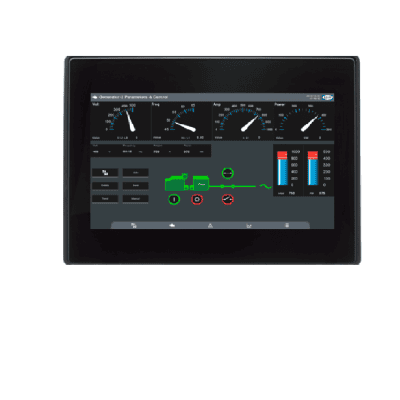
    Hardware AGI 407, AGI 410 • TFT colour display, LED backlight 500 cd/m2 • 24bit colour resolution • Capacitive touch screen, supporting multi-touch widgets • 3 Ethernet ports with individual MAC address with bridge option • 2 USB2.0 host ports • RS 232,RS 422 and RS 485 serial communication • SD card slot • Optional plug-in module for CANopen/J1939 communication • Slim design. Mounting depth less than 60 mm • Display backlight dimmable to 0 % • LED backlight timeout option, for extensive LED durability AGI 415, AGI 421 • TFT colour display, LED backlight 400 cd/m2 (RS 415) and 300 cd/m2 (RS 421) • 24bit colour resolution • Capacitive touch screen, supporting multi-touch widgets • 3 Ethernet ports with individual MAC address with bridge option • 2 USB2.0 host ports • RS 232ռ RS422 and RS485 serial communication • SD card slot • Optional plug-in module for CANopen/J1939 communication • Slim design. Mounting depth less than 50 mm • Display backlight dimmable to 0 % • LED backlight timeout option, for extensive LED durability  
    Load Controller ALC-4
    Liên hệ

    Load Controller ALC-4

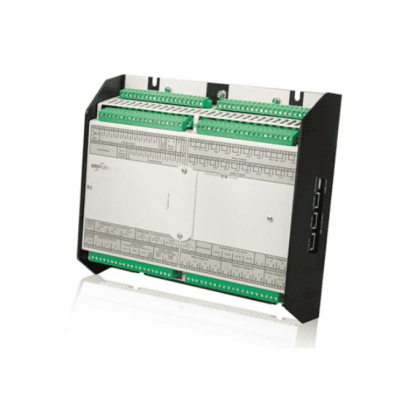
    Ideally suited for critical power applications, the ALC-4 integrates load handling into your power management system, eliminating the need for traditional PLC solutions. The ALC-4 improves system reliability and installs quickly while also reducing your investment and fuel costs compared to PLCs.   Secured power supply Intended for use in critical power management applications, the ALC-4 can control up to 8 consumer feeders per unit and helps control power plants in combination with other DEIF controllers.  By prioritising each consumer, the ALC-4 calculates which load groups can be supplied, depending on the available power in the system. This also means that your system is running fully optimised at all times, thus reducing fuel consumption along with wear and tear. Quick installation Contrary to traditional PLC solutions that have to be programmed manually from scratch, the ALC-4 units just require manual setting of a few parameters and you’ll be up and running. Combined with DEIF’s unique Emulation SW, you’ll be able to create and fully test your application solution virtually on a PC before installation and commissioning. This reduces installation time and risk of human error.  Power management The ALC units receive information from the power management system regarding produced power, available power and stand-by power (non-running but ready generators). This is based on the plant layout system in AGC power management (ALC-4 cannot be used as stand-alone controller). That means that the ALC not only knows about the power situation, but also where (on which busbar) it is placed in the system. This enables the ALC to react on BTBs being opened and subsequent change of the power scheme. The positions of the feeder breakers are a part of the USW plant setup. Disconnecting and reconnecting feeders In case of power shortages, the system disconnects feeders according to their priority. The least important feeder is disconnected first. The system also calculates how many feeders have to be disconnected to maintain power supply without overloading the generators. This calculation is carried out at all times, also taking BTB positions into consideration. Once enough power is present, the system will re-connect feeders, again according to their priority. Anticipated load-dependent start In case feeders are disconnected, and a generator is standby, the generator is to be started and put online. Once online, the system will calculate and connect the number of feeders possible without overloading the system. Operating modes Using the ALC, you can control the feeders automatically (auto mode) or manually by means of the display or Modbus commands. Features Prioritised load groups Anticipated load-dependent start Integrated in power management system Automatic startup of extra gensets Avoid overload of system Manual or automatic control of feeders Easy setup via USW and intuitive to use Easy commissioning, prepare SW setup before commissioning, live status of feeders shown in USW Flexible setup of different application types CANbus communication, long distance communication (up to 300 m) Security of supply – safety based on feeder priority
    DVC 550 - Digital automatic voltage regulator
    Liên hệ

    DVC 550 - Digital automatic voltage regulator

    The DVC 550 is a digital automatic voltage regulator, which monitors and regulates the alternator output with rated field current up to 7 A and up to 277V AC  The controller includes several protections and functions to keep the alternator running in full safe operation. The DVC 550 controller can improve genset performance, delivering up to a 10% increase of normal load impact capability and is suitable for any application in the critical power, IPP and rental segments.  Optimise generator size  Due to high inrush currents during start-up, generators for electric motor starting and transformer magnetisation are often oversized by up to 200%. Featuring inductive motor starting and magnetisation boosting, DEIF’s DVC 550 reduces oversizing requirements to a minimum and thereby save capital cost.  Increased step load performance  Compared to analogue AVR’s, DEIF’s digital AVR handles larger load-steps within the same frequency/voltage boundaries. Typically, the gensets will accept 10% additional nominal load. The embedded help features increase performance. The DVC 550 has no mechanical moving parts that regularly need replacement meaning less downtime, less service cost and more effective regulation. Fast backup for critical power applications If connected to an  AGC-4 Mk II controller, the DVC 550 can (depending on how fast the engine starts) synchronise multiple gensets within six seconds thanks to DEIF’s unique close before excitation-feature (run-up synchronisation). Critical power applications, in particular, will benefit from the improved control, increasing safety and allowing faster start-up.  Dehumidify and dry your genset with integrated ventilation functions Condensation build-up during idle time is a common problem in tropical climates. Use the genset ventilation mode to prevent condensation forming on the windings by removing built-up humid air using the alternator fan. Power generation is postponed until the humidity levels are safe. Condensation on the windings can be removed using the genset drying mode. During drying mode heat generated from a controlled internal circulating in the alternator winding is used to evaporate condensation on the windings. The genset will be connected to the busbar when it is safe to do so. Maximum control with an integrated genset controller solution  The DVC 550’s built-in J1939 based communication offers an exclusive communication channel to DEIF’s advanced controllers. Providing a high number of alternator data for display, broadcast or predictive maintenance, the J1939 built-in communication is unique on the market. You can quickly swap between nominal voltage and or frequency setting for a generator. Using CAN bus-based communication for voltage regulation reduces the potential number of failure sources. Use the DVC 550 together with the AGC-4 Mk II controller to maximise your benefits. Perfect solution for grid code compliance The DVC 550 fast reaction speed complies with European grid codes, including German VDE 4110/4105 standards. By combining the quick reaction speed with the AGC controller, it is easy to comply with advanced grid codes (for example, low voltage ride through). Features Unique CANbus integration between DVC 550 and AGC genset controller Start management capability with start on threshold, soft start and close before excitation (run-up sync)  Intelligent drying and ventilation mode for generators  Short circuit limitation Loss of voltage sensing alarm Over/under excitation limitation  Optimises genset performance and size using engine help functions Load acceptance module (LAM) assists the generator during heavy loads Negative forcing to avoid voltage peak during load sheddin U/F ramp Soft voltage recovery Stator current limitation Settings from AGC genset controller shared with the DVC 550 via CANbus Grid code compliant VDE410 and VDE4105
    DVC 350 - Digital automatic voltage regulator
    Liên hệ

    DVC 350 - Digital automatic voltage regulator

    The DVC 350 is a digital automatic voltage regulator (AVR) for controlling alternators which require rated field currents up to 5 A. Designed for a wide range of alternators with SHUNT, AREP (auxiliary winding), or PMG (permanent magnet) excitation, the DVC 350 controls the alternator from the field current or the output voltage regulation loops. It includes several protections and functions that keep the alternator running efficiently and safely. Wide range of regulation features The DVC 350 offers several regulation features that satisfy most common control requirements: reactive and line droop compensation, a soft start function, voltage soft recovery, start on threshold, and a load acceptance module (LAM) function. It enables regulation over a CAN bus connection, and it offers a wide range of protections (over and under voltage, over and under frequency, over and under excitation, and voltage unbalance). The unit is able to withstand sudden short-circuits for up to 10 seconds. Integration with the AGC 150 series The DVC 350 is ideal for use with DEIF AGC 150 controllers which are able to control all its built-in digital voltage regulation features and can receive fault information directly over a CAN bus connection. Factory settings can easily be changed using the free, user-friendly DEIF EasyReg Advanced PC utility software. The DVC 350 even offers a USB communication module for setting parameters and retrieving data. Ideally suited for volume production The tried and tested DVC 350 delivers cost-effective performance and is particularly well suited for volume production: DVC 350 setups can easily be copied from unit to unit without setting switches or potentiometers manually. This greatly speeds up setup operations and productivity, and it increases consistency and safety as the same setup can rapidly be applied across any number of AVRs. Individual DVC 350s can also be regulated using the built-in analogue potentiometer if needed. Features Reactive and line droop compensation Soft start function Voltage soft recovery Start on threshold Load acceptance module (LAM) CANbus integration to AGC for voltage regulation
    Battery charger 24/12V DC
    Liên hệ

    Battery charger 24/12V DC

    Tested and certified as a first grade quality unit with a robust aluminium housing and black plastic cover, the DBC-1 has a long and reliable product life and withstands years of everyday wear and tear. The DBC-1 is available with 12 V or 24 V voltage and 5 or 10 A current output. Using switch mode technology to reduce energy waste, the unit is also vibration-resistant and features dry contact alarm relay activation in cases of fault detection, as well as boost/equalisation for extended battery lifetime, and advanced over-voltage (transient) protection. Variants DBC-1 Outputs: 1205 12 V DC,5 A Aux. supplies: 230 V AC DBC-1 Outputs: 1210 12 V DC, 10 A Aux. supplies: 230 V AC DBC-1 Outputs: 2405 24 V DC, 5 A Aux. supplies: 230 V AC DBC-1 Outputs: 2410 24 V DC, 10 A Aux. supplies: 230 V AC